
When someone is experiencing cognitive changes, accepting help can feel like losing independence, privacy, routine, or control.
Families can often make the transition easier by:
- protecting the person’s sense of purpose and independence
- focusing on one change at a time
- keeping explanations short and simple
- offering limited choices
- introducing help gradually
- avoiding arguments about whether help is necessary
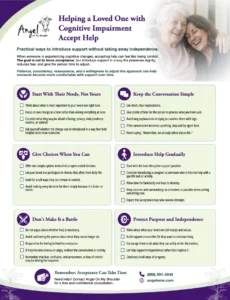
Download our free checkist "Helping a Loved One with Cognitive Impairment Accept Help" (PDF)
When you can clearly see that someone you love needs more support, it can be difficult to understand why they refuse it.
Maybe they need help managing medications. Perhaps driving is no longer safe. A caregiver may be needed in the home. Or you may simply be trying to make everyday life a little easier.
To you, the solution may seem obvious. To the person experiencing cognitive impairment, however, accepting that help may feel like something very different: a loss of independence, privacy, routine, or control.
That difference in perspective matters. The goal is not to force someone to accept help. It is to introduce support in a way that preserves dignity, reduces fear, and gives the person time to adjust.
Start With What Matters to Them
Before deciding how to introduce a change, think about what your loved one values most.
- What parts of their daily life matter most to them?
- What are they afraid they may lose?
A person who resists a caregiver, for example, may not simply be refusing assistance. They may worry about having a stranger in their home or losing the ability to make their own decisions. Understanding the concern behind the resistance can help you approach the conversation better.
Try focusing on one change at a time rather than solving every problem at once.
Whenever possible, introduce the change as something that supports the life they want to keep living, rather than something that takes control away from them.
Keep the Conversation Simple
Long explanations are not always more convincing. For someone with cognitive impairment, long explanations can make a difficult conversation even harder to process.
Use short, clear explanations and allow plenty of time for the person to respond. If the conversation becomes upsetting, it may be better to stop and try again later than to keep pushing for agreement.
Avoid phrases such as: “Remember, we already talked about this.”
The person may genuinely not remember the previous conversation. Reminding them that they have forgotten can increase frustration or embarrassment without helping move the conversation forward.
Give Choices Whenever You Can
Needing more help does not mean someone should stop having choices. Whenever possible, offer two simple options rather than an open-ended question.
That might mean asking: “Would you rather have someone come in the morning or after lunch?” instead of: “What do you want to do about getting help?”
Small choices can help a person maintain a sense of control over their day and their environment. Resist the temptation to make every decision simply because doing it yourself would be faster. Independence is worth protecting.
Introduce Help Gradually
A new person, new routine, or new expectation can be difficult for someone with cognitive impairment. Starting with the least disruptive form of support may make the transition easier.
If you are introducing a caregiver, for example, it may help to begin with a specific activity or task rather than immediately presenting the person as someone who will now be “taking care” of your loved one.
Allow time for familiarity and trust to develop.
Keep the rest of the person’s surroundings and routine as consistent as possible while something new is being introduced. And expect that acceptance may take more than one attempt.
Don't Make It a Battle
Trying to convince someone that they need help can quickly turn into an argument about what they can or cannot do. That usually isn't productive.
Avoid confronting the person about abilities they have lost or insisting that they agree with your assessment of the situation. Instead, pay attention to the feeling behind the resistance.
- Are they frightened?
- Embarrassed?
- Confused?
- Worried about losing control?
If the conversation is becoming tense, redirect it or return to the subject another time. Sometimes the most effective approach is simply to stop pushing.
Protect Purpose and Independence
Support should not automatically mean doing everything for someone. Think about what your loved one still enjoys, values, and can safely do. Encourage them to continue participating in those parts of life.
Carol Freeborn has written about the importance of purpose when helping people as they age. Safety matters, but a meaningful life involves more than simply preventing something from going wrong.
When support is built around what the person still wants to do, rather than around everything they can no longer do, it can feel much less like a loss of independence.
Remember That Acceptance Can Take Time
Families often feel pressure to fix a difficult situation quickly. But cognitive changes, family dynamics, and changing care needs are rarely solved in a single conversation or weekend visit.
Progress may be slow. You may take two steps backward before moving forward again.
That does not mean the plan has failed. Patience, consistency, reassurance, and a willingness to change your approach can help someone gradually become more comfortable with the support they need.
Sometimes families need help figuring out not only what support is needed, but how to introduce it in a way their loved one can accept.
Angel On My Shoulder’s nurse case managers help families navigate cognitive changes, introduce care and services, coordinate medical needs, and develop plans that support both safety and independence.
Need help making a plan?
(888) 391-4043
Contact us for a free and confidential consultation to discuss your situation and care needs.


